
Glenn County Probate Court
When you need to search Glenn County probate court records, the Superior Court in Willows handles all estate matters for the county. The probate division processes cases involving wills, estate administration, conservatorships, and guardianships. Residents file probate petitions at the courthouse located at 526 West Sycamore Street. Glenn County sees fewer probate cases than larger California counties but maintains the same filing procedures and requirements. You can call the probate division at 530-934-6446 extension 7008 for information about your case or filing requirements.
Glenn County Probate Quick Facts
Glenn County Superior Court Probate Division
The Glenn County courthouse sits in the heart of Willows. Walk through the main entrance on West Sycamore Street to reach the clerk's office. Staff can answer basic questions about probate procedures and forms. They help you file documents and schedule hearings.
Court hours let you file papers Monday through Friday during business hours. Most probate hearings happen in the morning. Call ahead to confirm hearing times for your case. The court processes estate matters in the order received.
Probate cases in Glenn County typically take nine months to a year and a half to complete. Simple estates without disputes close faster. Complex estates with multiple properties or contested issues take longer. The timeline depends on how quickly you file required documents and whether any problems come up.
The probate website at glenn.courts.ca.gov provides information about local procedures. Check the site for forms, filing instructions, and helpful resources. The court follows California statewide rules plus any local requirements specific to Glenn County.
The clerk's office can process most standard filings the same day you submit them. Complex filings may need review by the probate examiner. This adds time to the processing. The examiner checks that your documents meet all requirements before the judge sees them. Most first filings need corrections or additional information.
Starting a Probate Case
You start probate by filing form DE-111. This is the Petition for Probate. Bring a certified death certificate and the will if one exists. The filing fee is $435. Pay by cash, check, or money order at the clerk window.
After you file, the court sets a hearing date. You must give notice to all heirs and beneficiaries. Notice goes out by mail. You also publish notice in a local newspaper. Glenn County has specific newspapers that meet the legal publication requirements. Ask the clerk for the approved list.
File your proof of notice before the hearing date. The judge needs to see that you properly notified everyone. If notice was done wrong, the judge may continue the hearing. This delays your case.
At the hearing, the judge reviews your petition and all supporting documents. If satisfied, the judge issues Letters of Administration or Letters Testamentary. These letters give you authority to manage estate assets. You can then open estate bank accounts, sell property, and pay debts.
Probate Forms and Filing Fees
California uses standard Judicial Council forms for probate. Form DE-111 starts the case. Form DE-140 is the Order for Probate. Form DE-150 provides Letters giving you authority. Form DE-160 lists all estate property.
You can get forms at the courthouse or download them from courts.ca.gov. The court staff can give you blank forms but cannot fill them out for you. They cannot give legal advice about how to complete forms.
The initial petition costs $435 to file. You pay another $435 when you file the final petition to close the estate. Other fees include $40 for certified copies plus 50 cents per page. Recording fees vary based on what you need recorded.
Small estates under $208,850 may avoid full probate. You can use a simpler affidavit process for these estates. The threshold amount changes every few years. Check the current limit before deciding which process to use.
Note: The small estate threshold increased to $208,850 on April 1, 2025 for deaths occurring on or after that date.
Getting Legal Help
The court cannot recommend specific attorneys. However, the State Bar of California runs a referral service. Call them to find probate lawyers practicing in Glenn County. Many lawyers offer a free first meeting.
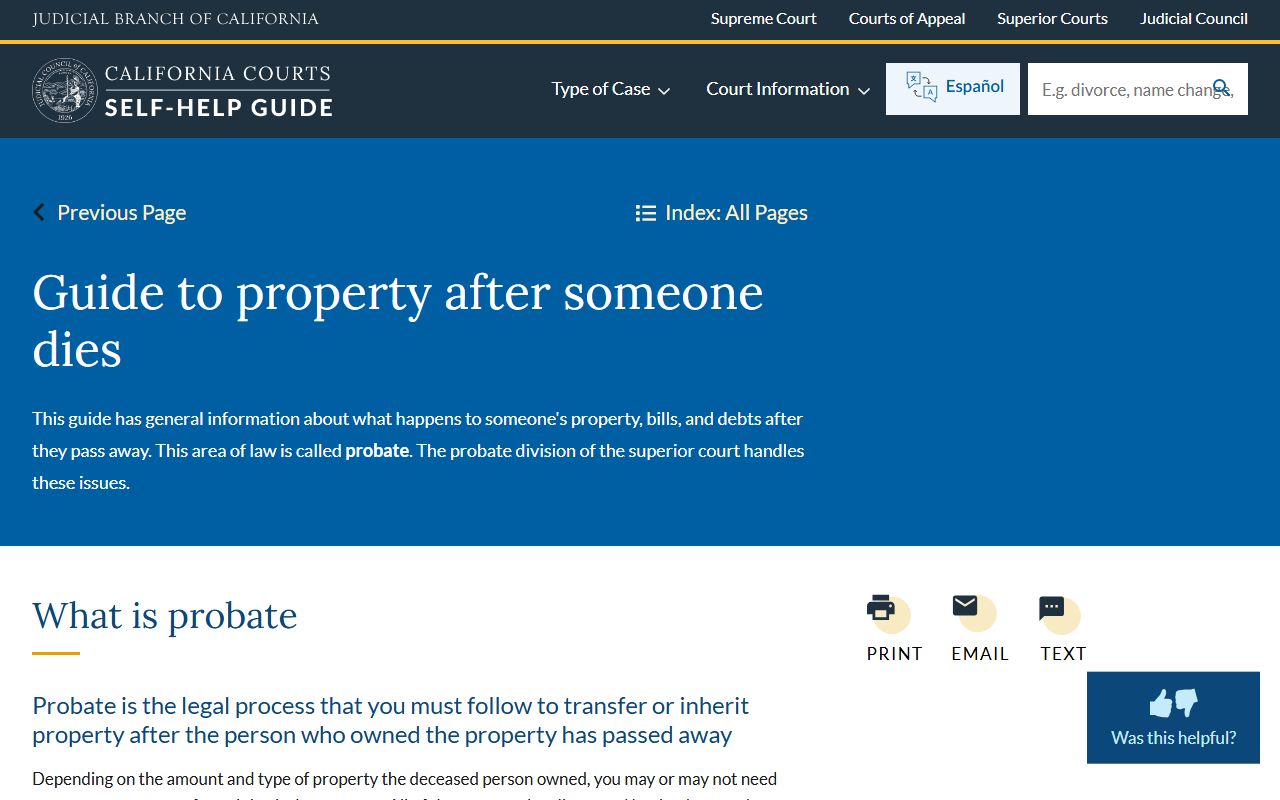
Legal aid may be available if you have limited income. The California Courts website at selfhelp.courts.ca.gov offers guides and information for people representing themselves. You can find answers to common questions and step-by-step instructions.
Some cases need professional help. Contested estates, disputes among heirs, or complex tax issues typically require an attorney. Straightforward cases with a clear will and cooperative heirs may not need a lawyer. Evaluate your situation before deciding whether to hire someone.
Death Certificates and Related Documents
You need a certified death certificate to start probate. Get copies from the Glenn County Clerk-Recorder or the California Department of Public Health. The state office processes requests at cdph.ca.gov. Local copies usually arrive faster than state copies.
Order multiple certified copies at once. You need originals for banks, insurance companies, and other entities. Photocopies do not work for most purposes. Each certified copy costs about $28 from the state.
Property deeds and title documents also matter in probate cases. The County Recorder maintains these records. Check property ownership before filing your inventory. You must list all real estate the decedent owned in Glenn County and elsewhere.
How Long Probate Takes
Expect nine months minimum for probate in Glenn County. Most cases take a year to eighteen months. The first hearing happens about two months after filing. Then you have four months to file the inventory and appraisal.
During administration, you collect assets, pay debts, and file accountings. This phase takes the most time. Selling real estate can add months to the process. Waiting for tax clearances also extends the timeline.
When ready to close, you file the final petition and accounting. The court schedules another hearing. After the judge approves distribution, you can give assets to heirs. Then file receipts showing distribution was completed. The judge signs the final order closing the estate.
Delays happen for many reasons. Missing documents, incomplete filings, or examiner questions all slow things down. Disputes among heirs add significant time. Keep your case moving by filing documents promptly and responding quickly to court requests.
Nearby Counties
If your probate matter is in a neighboring county, see these pages: Butte County, Tehama County, Colusa County, and Lake County.