
Find California Probate Court Records
California probate court records are public documents maintained by Superior Courts in all 58 counties across the state. These records contain information about estate administration, wills, trusts, conservatorships, and guardianships filed after someone passes away. You can search probate case files online through county court portals, visit local courthouses in person, or request copies by mail. Each county operates its own probate division with specific filing procedures and case access systems. The California Judicial Council provides standardized forms and self-help resources to assist with probate record searches.
California Probate Records Overview
County Superior Court Probate Records
All probate matters in California are handled at the county level through Superior Courts. Each of the 58 counties maintains a probate division that processes estate cases, issues letters of administration, and manages guardianship filings. Most counties now offer online case portals where you can search probate records by case number, party name, or decedent information. Los Angeles County processes the highest volume of probate cases in the state, with the Stanley Mosk Courthouse serving as the central probate location. San Diego, Orange, Riverside, and San Bernardino counties also handle significant caseloads each year.
To find a specific probate case, you need to know which county has jurisdiction. This is usually the county where the person lived at death. If they owned property in multiple counties, you may need to check several locations. Each county sets its own hours and access policies. Some courts require appointments for in-person searches. Many smaller counties still use paper filing systems, while larger jurisdictions have moved to electronic case management.
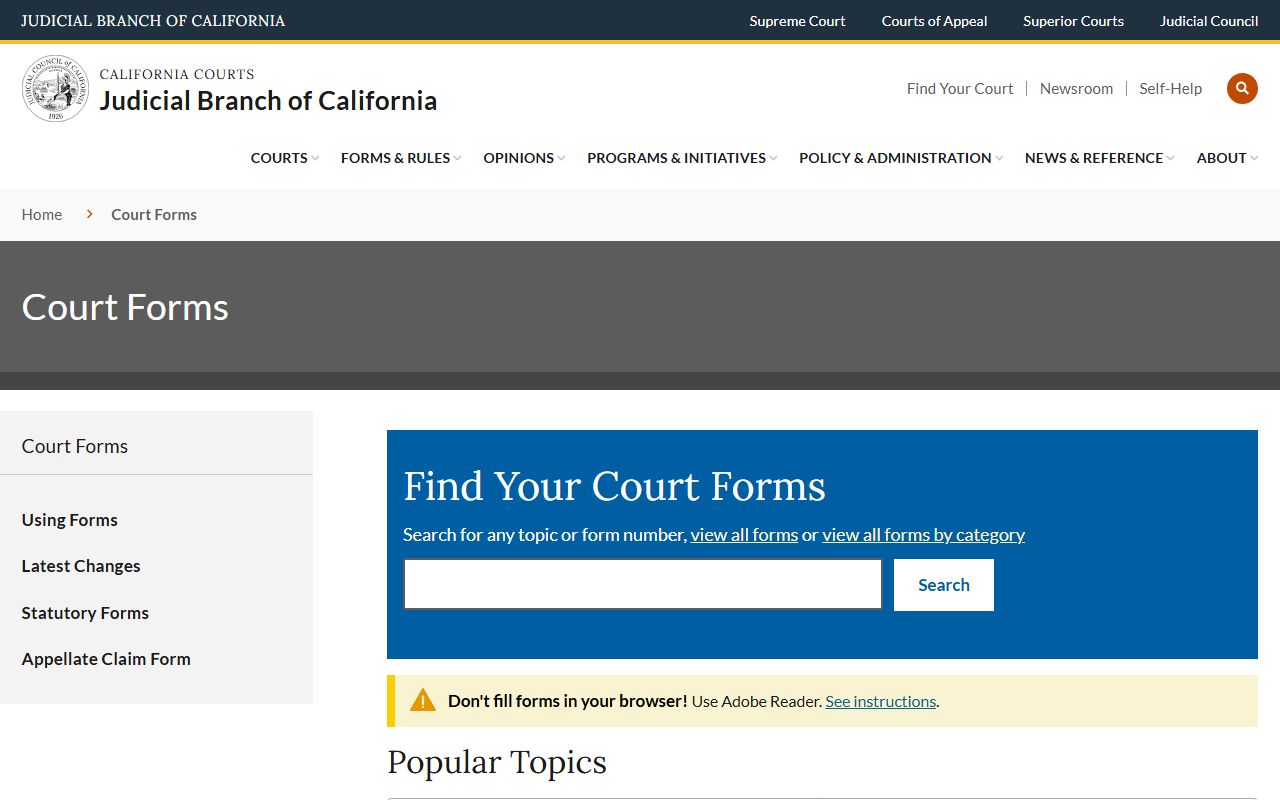
The California Judicial Council maintains the official probate forms used statewide. Form DE-111 starts most probate cases. Form DE-140 is the court order that appoints someone to manage the estate. Form DE-150 provides letters showing authority to act. These standardized forms work in all California counties, though some courts require additional local forms or cover sheets.
Every county charges the same base filing fee set by state law. The initial petition costs $435 under California Government Code 70650. Final distribution petitions also cost $435. Delivering a will to court costs $50. Getting certified copies costs $40 plus fifty cents per page. Some counties accept credit cards while others require cash or money orders.
Probate Case Information Resources
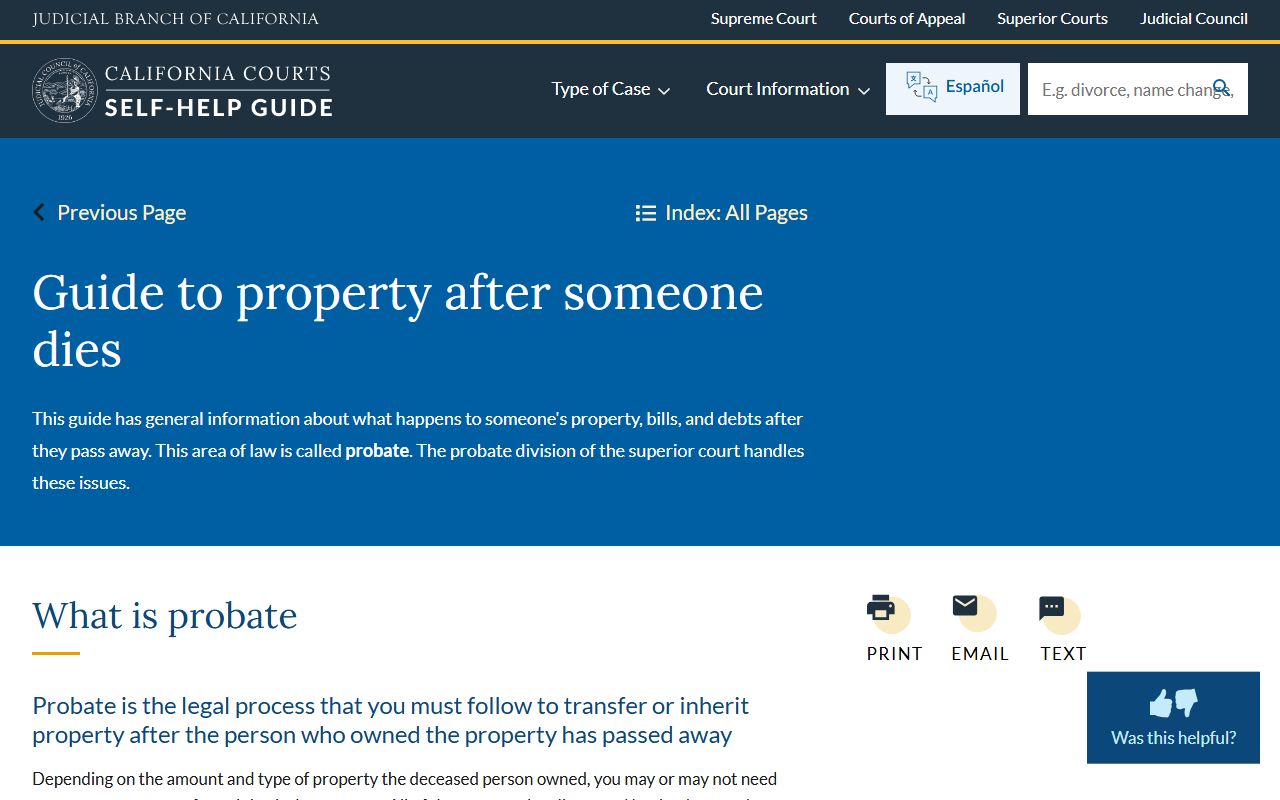
The California Courts Self-Help Center offers free guidance for people searching probate records or filing probate cases. Their website at selfhelp.courts.ca.gov/probate explains what probate is and when it is required. The site covers small estate procedures, formal probate administration, and how to access records from closed cases. You can also use the live chat feature to ask questions about finding probate documents.
Not all estates require formal probate in California. If the total value is under $208,850 as of April 1, 2025, heirs can use a small estate affidavit instead. This threshold adjusts every three years based on California Probate Code Section 890. The next adjustment happens April 1, 2028. Small estate procedures are much faster than full probate. You file a simple form and wait 40 days before collecting assets.
California law requires that any will must be delivered to the Superior Court within 30 days after someone learns of a death. This is true even if no probate case will be filed. The rule comes from Probate Code Section 8200. Many people do not know about this requirement. The court keeps the will on file in case it is needed later.
Online Probate Record Databases
Tyler Technologies Odyssey is the most common case management system in California. More than 28 counties use this platform. It lets you search by name, case type, or filing date. Los Angeles, San Diego, Orange, Riverside, Sacramento, Santa Clara, Alameda, and Contra Costa all use Tyler systems. Each county has its own portal URL, but the search interface looks similar across locations.
Some counties use Journal Technologies for their case portal. El Dorado, Del Norte, Sacramento, and San Benito counties run this system. Imperial and Ventura counties use Tyler eCourt, which is different from Tyler Odyssey. San Francisco maintains its own custom search tool. Merced County explicitly states that probate case information is not available online. You must visit or call their clerk office.
When you find a case online, you can usually see the register of actions. This shows all documents filed and all hearings held. Some counties let you view actual documents through the portal. Others only show the list of filings. If you need copies, you may have to request them separately. Most courts charge per page for copies even if you can view documents online.
Historical probate records may not appear in online systems. Many counties only digitized cases from the 1990s forward. For older estates, you need to contact the court directly or check with the California State Archives. The archives at sos.ca.gov/archives hold probate records from 28 counties dating back to the 1850s.
California Probate Laws and Procedures
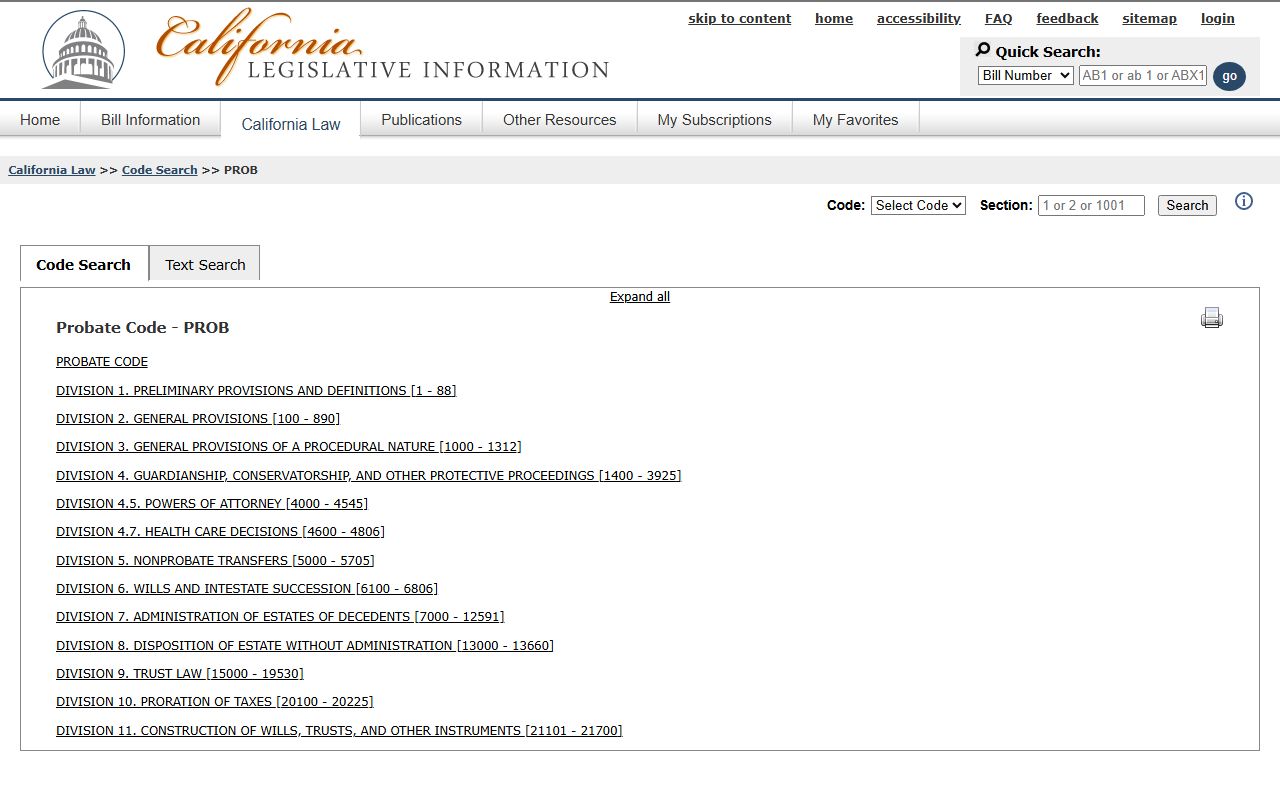
The California Probate Code governs all estate proceedings in the state. You can read the full code at leginfo.legislature.ca.gov through the state legislature website. Key sections include Probate Code 8200 on will delivery requirements, Probate Code 13100 through 13116 on small estate affidavits, and Probate Code 13200 through 13210 on transferring real property from small estates.
A typical probate case takes nine to eighteen months to complete. Simple estates with no disputes can close in six months. Complex cases involving business assets, real estate in multiple states, or family conflicts may take years. The timeline depends on asset complexity, creditor claims, tax issues, and court scheduling. Each county runs probate hearings on different days and has different case backlogs.
Probate records are public with few exceptions. Anyone can search for and view probate case files. Some information may be sealed or redacted. This includes Social Security numbers, financial account numbers, and certain medical information. Conservatorship records sometimes have restricted access to protect the conservatee. Most estate information is fully public.
Death Records and Related Documents
The California Department of Public Health maintains death certificates statewide. You can order copies by mail or online through their vital records office. The address is P.O. Box 997410, Sacramento CA 95899-7410. The phone number is 916-445-2684. Death certificates are often required when filing probate cases. They prove that someone passed away and show the date and place of death.
County recorders also keep death records in some cases. Property records may show when real estate transferred due to death. Tax assessor offices track property ownership changes. These records can help trace estate assets even if no formal probate case was filed. Banks and financial institutions maintain their own records of accounts and beneficiaries.
Court records beyond probate may be relevant to estate matters. Civil lawsuits involving the decedent may affect the estate. Criminal restitution orders can create claims against estates. Family law cases may establish support obligations or property rights. Federal court records might show bankruptcy filings or tax disputes.
Local Probate Court Differences
Each California county operates its probate division differently. Los Angeles requires mandatory electronic filing for all attorneys as of June 5, 2017. Most other counties offer optional e-filing. Some small counties like Alpine and Sierra have very limited staff and hours. They may only process probate cases certain days of the week. Large counties have dedicated probate departments with multiple courtrooms and judges assigned full-time to probate matters.
San Mateo County requires appointments for all in-person visits to the probate clerk. You cannot walk in without calling ahead. Their office hours are 8:30 AM to 1:00 PM Monday through Thursday, and 8:30 AM to 12:00 PM on Friday. Siskiyou County requires that probate letters and bonds must be filed in paper form, not electronically. Fresno County publishes detailed probate examiner notes online to help people understand local procedures.
Probate hearing schedules vary widely. Some counties hold hearings every Wednesday. Others do probate only twice per month. San Luis Obispo County typically schedules first hearings four to five weeks after filing. Shasta County can complete simple estates in six months. Glenn County says most cases take nine months to one and a half years. The timeline depends on how busy the court is and how quickly parties complete required steps.
Cities do not have separate probate courts in California. All probate matters go through the county Superior Court system. Even the largest cities like Los Angeles, San Diego, and San Jose handle probate at the county level. Some cities have legal aid programs or senior services that can help residents understand probate procedures and locate county court resources.
Tips for Finding Probate Cases
Start with the county where the person lived at death. This is usually where the case gets filed. If you are not sure which county, try checking property records to see where they owned real estate. Voter registration records and driver license records can show residence. Obituaries often list the city and county where someone lived.
When you search a county portal, try different name variations. Search last name only. Search with middle initial and without. Some systems are sensitive to spelling. If the person went by a nickname, try both the legal name and the nickname. Women who were married may have cases under a maiden name or married name.
Case numbers follow different formats in different counties. Los Angeles uses a specific prefix for probate cases. Other counties mix probate with other civil case types. If you have a case number from a document, make sure you enter it exactly as shown. Leading zeros matter in some systems but not others.
Not finding a case online does not always mean no case exists. The case might be very old and not digitized. The case might be filed in a different county than you expect. There might not be a probate case at all if the estate qualified for small estate procedures or if all assets transferred outside of probate through beneficiary designations.
Browse Probate Records by Location
California Counties
Explore probate court records from California's 58 county Superior Courts. Each county maintains its own probate division with local filing procedures and case access systems.
- Los Angeles County
- San Diego County
- Orange County
- Riverside County
- San Bernardino County
- Santa Clara County
View All 58 California Counties →
Major California Cities
Find information about accessing probate records in California's largest cities. All probate cases are handled by the county Superior Court where the city is located.