
Find San Bernardino County Probate Cases
San Bernardino County processes probate cases at the main courthouse located at 247 West Third Street in San Bernardino. This facility serves the largest county in the United States by area. Estate administration, will contests, conservatorships, and guardianships all file at this central probate location. The county offers online case access through the CAP portal. You can search probate records by party name or case number from any device with internet access. Most filings from recent decades appear in the web system. Very old records may require an in-person visit or records request.
San Bernardino County Probate Quick Facts
San Bernardino Superior Court Probate
The probate division handles all estate matters at the downtown San Bernardino courthouse. Call 909-521-3388 for general questions. The clerk office can help with filing procedures and case status inquiries. Staff cannot give legal advice but can explain what forms you need.
Despite the county's massive size, probate cases file at the single downtown location. This includes estates from mountain communities, desert cities, and the western valley areas. All probate hearings happen in San Bernardino. Plan for travel time if you live in outlying areas.
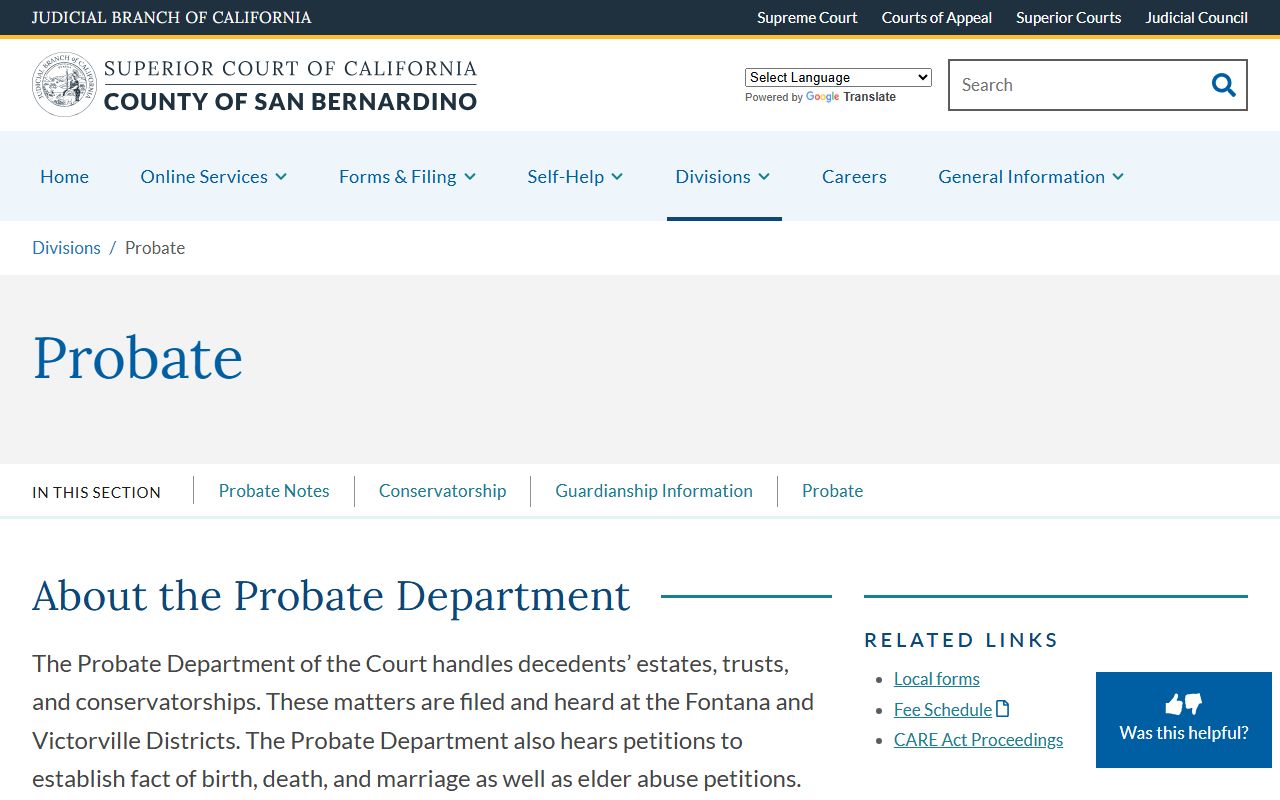
Visit sanbernardino.courts.ca.gov for local rules and procedures. The website provides information about filing requirements specific to San Bernardino County. You can find contact information, forms, and instructions for common probate tasks.
Parking at the courthouse can be challenging during busy times. Several paid lots operate near the building. Metered street parking is available but limited. Arrive early to find a spot. Public transportation serves the downtown area if you prefer to avoid parking hassles.
Search Cases Through CAP Portal
San Bernardino County offers the CAP system for online case access. Visit cap.sb-court.org to search probate records. The portal lets you look up cases by name, case number, or attorney. You can view the register of actions and see filed documents.
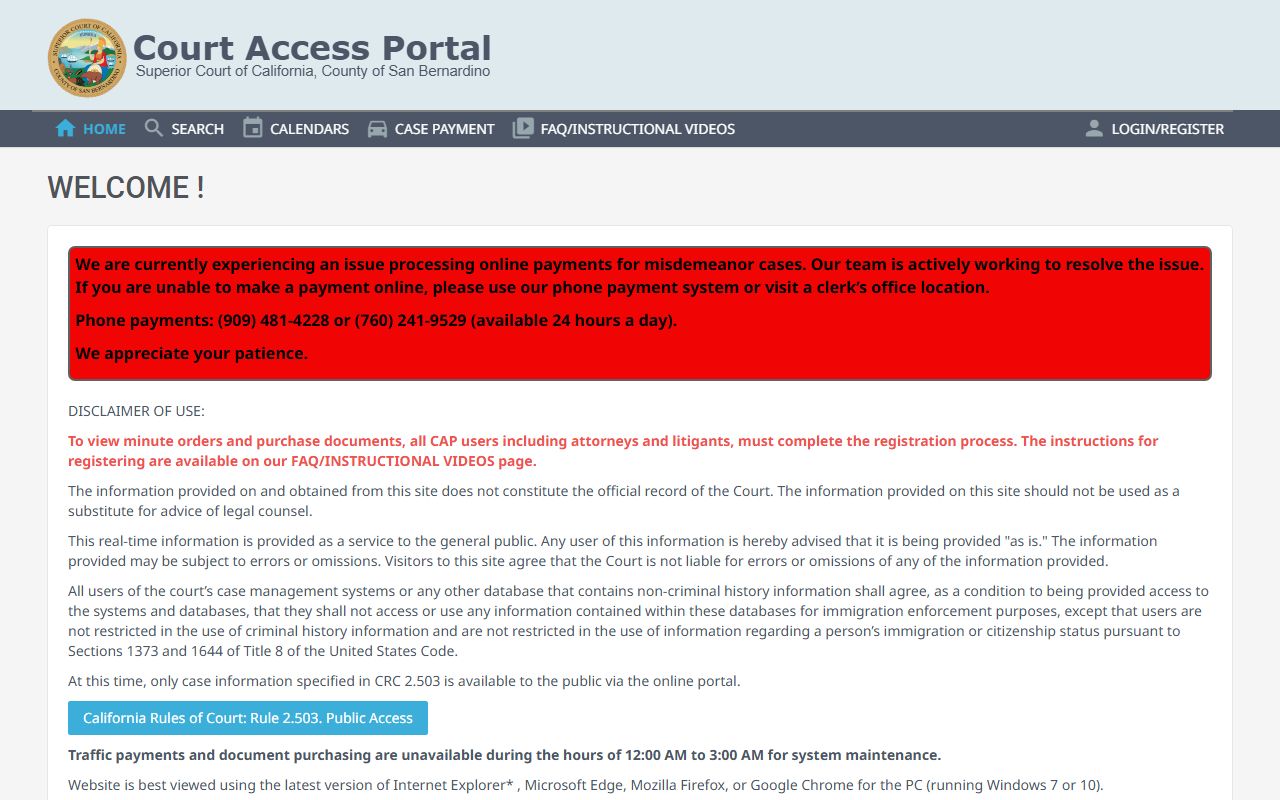
The system shows document images for most recent cases. Click on a filing to see the PDF. Some older cases have index information but no document images. If you need copies of documents not available online, request them through the clerk office.
Searching is free. You do not need to create an account for basic lookups. The portal works on phones, tablets, and computers. No special software is required. Just use a web browser to access the system.
If your search returns no results, try variations of the name. People sometimes file under middle names or nicknames. The system matches exactly what you type. Check spelling and try different combinations. You can also search by case number if you have it.
Note: For certified copies of probate documents, contact the clerk office directly. The online portal is for viewing only. Certified copies carry an official seal and are needed for many estate transactions.
Filing Probate Petitions
Start with the Petition for Probate, form DE-111. Attach a certified death certificate and the original will. If no will exists, indicate intestate succession on the petition form. List all heirs and their contact information.
File at the probate clerk window in San Bernardino. The filing fee is $435. Pay by cash, check, money order, or credit card. Make checks payable to San Bernardino Superior Court. Keep your receipt.
The court assigns a hearing date when you file. This is usually six to eight weeks out. You must publish notice in a local newspaper. The court website lists approved newspapers for different areas of the county. File proof of publication before the hearing.
Mail notice to all heirs and beneficiaries using form DE-120. File proof of service at least 15 days before the hearing. Proper notice is required. The court will continue the hearing if notice requirements are not met.
Attend the hearing with photo ID. Answer the judge's questions about the estate. If approved, you receive Letters of Administration or Letters Testamentary. Get certified copies from the clerk after the hearing. Banks and financial institutions need certified Letters to release estate assets to you.
File an Inventory and Appraisal within four months. Hire a probate referee to value estate assets. The referee is appointed by the court and charges a statutory fee of one-tenth of one percent of the estate value.
Small Estate Alternatives
Estates worth less than $208,850 may use simplified procedures. This threshold applies to probate assets only. Do not count life insurance, retirement accounts, or other assets with named beneficiaries.
Use form DE-310 to transfer personal property in small estates. This affidavit method requires no court filing. Wait 40 days after death. Present the affidavit to holders of assets. They must release property to you within a reasonable time.
For real estate, file form DE-305 with the probate court. This procedure is faster than full probate. You skip many steps required in regular estate administration. The court reviews the petition and issues an order transferring the property.
Check values carefully before using small estate procedures. If creditors or heirs challenge your use of the simplified method, you may need to open a full probate case. When the estate value is close to the threshold, consider filing regular probate to avoid later problems.
Legal Help Resources
Legal aid for probate cases is limited in San Bernardino County. Most legal services organizations focus on family law, housing, and consumer issues. For probate help, contact the State Bar of California lawyer referral service at 866-442-2529.
Senior Legal Hotline serves Californians age 60 and over. Call 800-222-1753 for free advice on wills, trusts, and probate. Volunteer attorneys staff the hotline during business hours. The service is free regardless of income.
Visit selfhelp.courts.ca.gov for online resources. The California Courts Self-Help Center offers guides and videos. You can learn how to fill out forms and navigate the probate process without hiring a lawyer.
Major Cities in San Bernardino County
San Bernardino County covers a vast area with many large cities. All probate cases file at the county courthouse in San Bernardino city.
Cities with populations over 100,000: San Bernardino, Fontana, Ontario, Rancho Cucamonga, Victorville, and Rialto.
Nearby Counties
For probate cases in neighboring counties, visit: Riverside County, Los Angeles County, Orange County, and Kern County.