
Sacramento County Probate Records
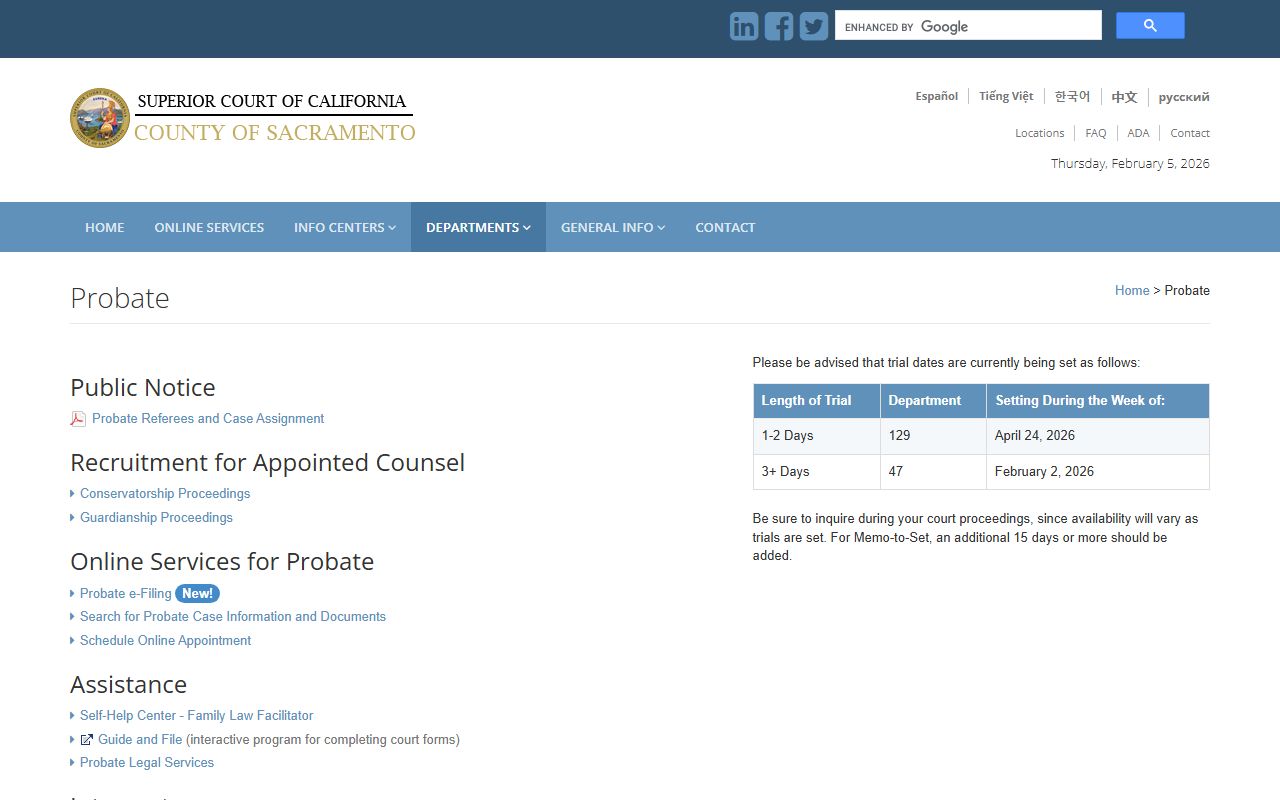
Sacramento County processes probate cases at the Carol Miller Justice Center located at 3341 Power Inn Road. This facility handles all estate administration for California's capital county. The probate department maintains files for wills, trusts, conservatorships, and guardianships. Cases from throughout Sacramento County come to this one location. The court operates an online portal where you can search probate records by name or case number. Most recent filings appear in the web system within a day or two. Historical records may require a visit to the clerk office or a formal records request.
Sacramento County Probate Quick Facts
Superior Court Probate Operations
The probate division operates at the Carol Miller Justice Center. Hours run 8:00 AM to 5:00 PM on weekdays. The office closes for lunch but clerk staff rotate so someone is always available. Phone the main line for general questions. Expect hold times during busy periods.
Sacramento County uses Journal Technologies for case management. This system powers the online portal. You can access case files through a web browser. No special software is needed. The portal works on phones, tablets, and computers.
Visit saccourt.ca.gov for local rules and forms. The website has instructions for filing different types of probate petitions. You can download required forms and read about court procedures. Local rules add requirements beyond statewide forms.
The Carol Miller facility has ample parking. A large lot surrounds the building. Parking is free. Security screening happens at the entrance. Leave prohibited items in your car. No weapons, large bags, or sharp objects are allowed inside.
Search Cases Online
Sacramento County provides web access to probate records at prod-portal-sacramento-ca.journaltech.com. Search by party name, case number, or attorney. The portal shows the register of actions and many filed documents.
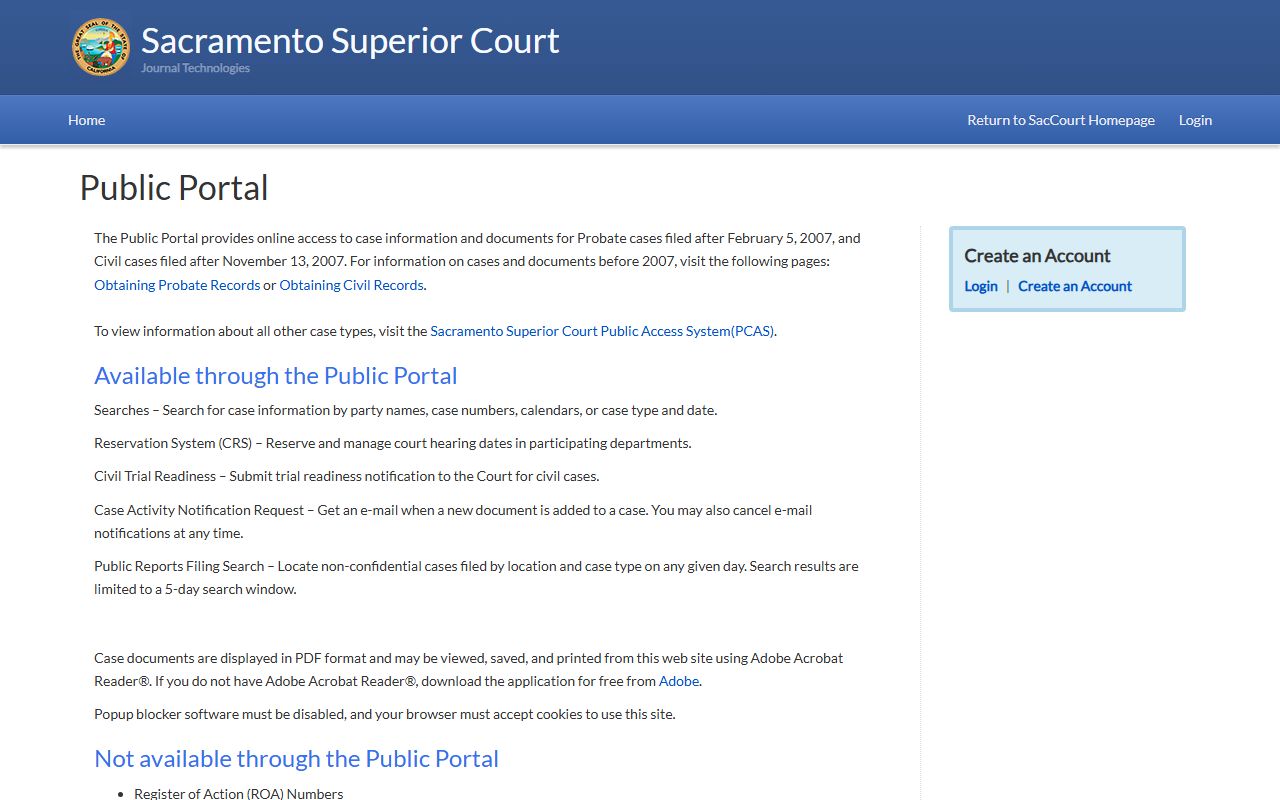
You can view documents for free. The system shows PDF copies of filed papers. Some documents may be sealed or restricted. If you cannot access a file, contact the clerk office. They can tell you if the record is public or confidential.
The portal lets you see upcoming hearings. Check the calendar section for scheduled probate matters. Tentative rulings sometimes post before hearings. This gives you advance notice of how the judge may rule.
For certified copies, you must go through the clerk office. The online portal is for viewing only. Certified documents carry an official seal and signature. Banks and other institutions need certified copies to verify your authority over estate assets.
Note: The portal shows cases from recent decades but not all historical files. Very old probate records may exist only on paper in the courthouse archives or at the California State Archives in Sacramento.
How to File an Estate Case
Start with form DE-111, the Petition for Probate. Gather a certified death certificate and the original will. If no will exists, you file for intestate administration. List all heirs and their addresses on the petition.
File your petition at the Carol Miller Justice Center. The clerk reviews it for completeness. Pay the $435 filing fee. The court assigns a case number and hearing date. Hearings typically happen four to six weeks after filing.
Publish notice in a local newspaper. Sacramento has several approved publications. The clerk can provide a list. You need proof of publication before your hearing. The newspaper will send you an affidavit after publication runs.
Mail notice to all interested parties. Use form DE-120 for this mailing. File proof of service with the court at least 15 days before the hearing. The judge will not proceed without proper notice to heirs and beneficiaries.
Attend the hearing at the scheduled time. Bring photo ID. The judge asks questions about the estate. If satisfied, the judge signs the order appointing you as estate representative. Get certified Letters from the clerk after the hearing. These authorize you to act on behalf of the estate.
File an Inventory and Appraisal within four months. Hire a probate referee to value estate assets. The referee fee is set by law. After filing the inventory, you manage the estate according to court supervision requirements.
Simplified Procedures for Smaller Estates
Estates worth less than $208,850 may qualify for simplified probate. The limit includes all assets that would go through probate. Do not count life insurance or retirement accounts with named beneficiaries.
For personal property, use the Affidavit for Transfer procedure. Fill out form DE-310. Wait 40 days after death. Then present the affidavit to banks or other holders of assets. They must release the property to you. No court filing is required.
Real estate in small estates uses form DE-305. File this with the probate court. The process is faster than full probate. You skip many steps required in regular estate administration. The court still reviews and approves the transfer but with less oversight.
Check the threshold carefully. If you underestimate the estate value and skip full probate, you may face problems later. Creditors or heirs can challenge improper use of small estate procedures. When in doubt, file a regular probate petition.
Legal Help in Sacramento
Legal Services of Northern California serves Sacramento County. Call 916-551-2150 for intake. They help low-income residents with probate and estate matters. Services are free if you qualify based on income.
The Senior Legal Hotline at 800-222-1753 provides advice to older Californians. Volunteer attorneys answer questions about wills, trusts, and probate. The service is free regardless of income for people over 60.
The State Bar of California offers a lawyer referral service. Call 866-442-2529 to get names of local probate attorneys. Most offer a reduced-fee initial consultation. This lets you discuss your case and get a fee quote before hiring anyone.
Visit selfhelp.courts.ca.gov for free online guides. The California Courts Self-Help Center has videos and instructions for common probate tasks. You can learn how to fill out forms and understand court procedures.
Cities in Sacramento County
Sacramento County includes the state capital and several large suburbs. All probate cases file at the county Superior Court.
Cities with populations over 100,000: Sacramento, Elk Grove, and Roseville.
Nearby Counties
For probate cases in neighboring counties, see: Placer County, Yolo County, San Joaquin County, and El Dorado County.