
Probate Records in Santa Clara
Probate cases for Santa Clara residents go through Santa Clara County Superior Court. The city of Santa Clara does not operate its own probate court or handle estate matters. All probate proceedings, including estate administration, will contests, conservatorships, and guardianships, are filed with the county court system. The probate division is located in San Jose at 191 North 1st Street. This court processes all cases for people who lived in Santa Clara or anywhere else in Santa Clara County when they passed away. It also handles estates when the deceased owned property in the county. The county Superior Court has exclusive jurisdiction over all probate matters involving Santa Clara residents and their estates.
Santa Clara Probate Information
Santa Clara County Handles Cases
California law assigns probate to county courts. Cities lack authority over estate cases. Santa Clara County Superior Court handles all probate filings for Santa Clara and every other city in the county.
The courthouse is in San Jose at 191 North 1st Street. Call 408-882-2900 for information. Email ssprobinfo@scscourt.org with questions. The probate division requires appointments for all in-person visits. Hours are Monday through Thursday 8:30 AM to 1:30 PM, and Friday 8:30 AM to noon.
The county provides online case access through its portal. Visit portal.scscourt.org to search cases by name or number. The system shows filed documents, hearing schedules, and court orders. Public access does not require an account.
Electronic filing is available for probate cases. You can file online, by appointment in person, or by mail. Most law firms use e-filing. Self-represented people often prefer in-person appointments where clerk staff can answer basic questions.
How to File Estate Cases
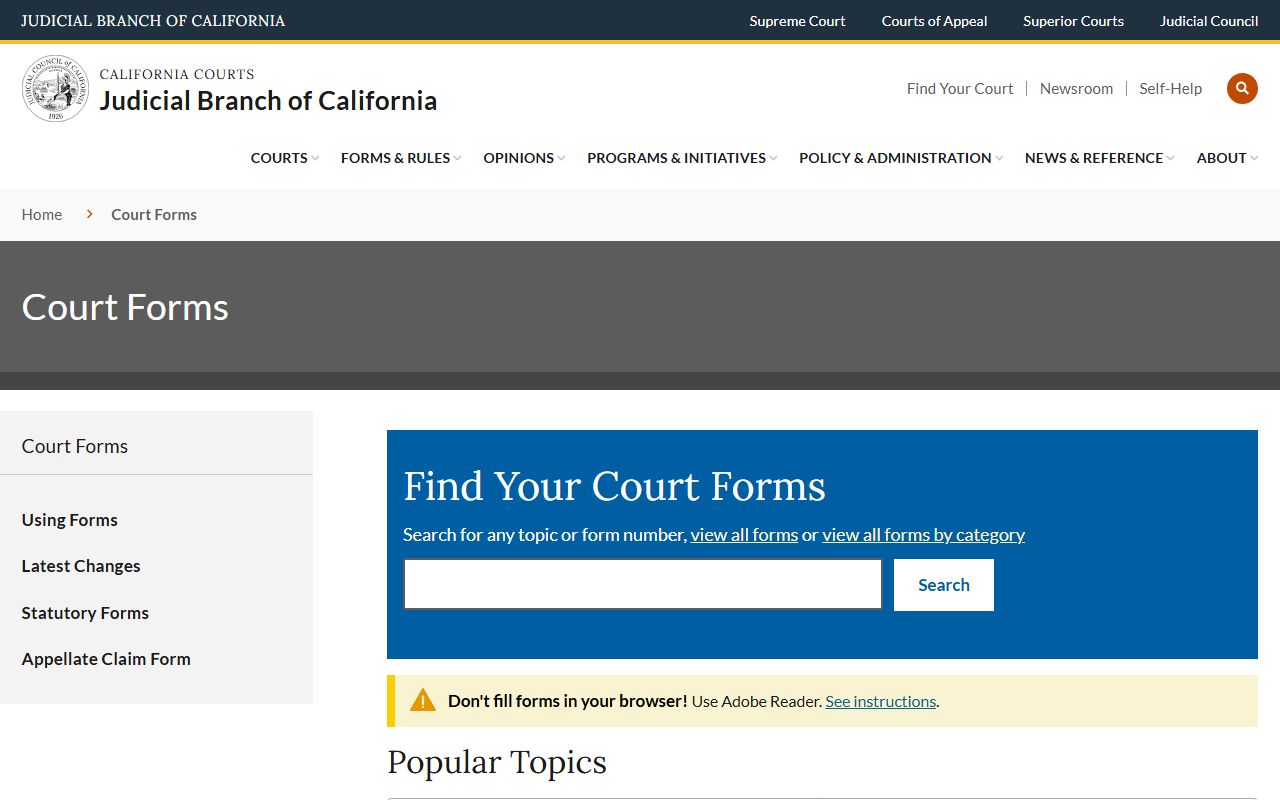
Start with form DE-111. This is the Petition for Probate. Download it from courts.ca.gov. Complete all required fields. Include information about the decedent, their assets, and the person who will serve as executor or administrator.
Gather a certified death certificate. If a will exists, get the original document. Schedule an appointment to file at the San Jose courthouse. Bring your petition, death certificate, and will. Pay the $435 filing fee by check, money order, or credit card. Cash is not accepted.
The clerk assigns a case number and sets a hearing date about six to eight weeks out. You must publish notice of the hearing in a local newspaper. The San Jose Post-Record is commonly used. Mail notice to all heirs and beneficiaries. File proof of these notices before the hearing date.
Attend your hearing. Bring photo ID. The judge reviews your petition and supporting documents. If everything is proper, the judge issues an Order for Probate and Letters. These letters authorize you to manage estate assets, access accounts, pay debts, and handle other estate business.
Within four months of receiving letters, file an Inventory and Appraisal using form DE-160. List all estate assets and their values. A court-appointed referee appraises certain property. When ready to close the estate, file a final accounting and petition for distribution.
Legal Resources for Santa Clara
The Santa Clara County Law Library is at 360 North 1st Street in San Jose, near the courthouse. The library has probate forms, legal guides, and research materials. Staff help you find resources but cannot give legal advice.
Free and low-cost legal help is available through:
- Senior Adults Legal Assistance at 408-295-5991 for people over 60
- Law Foundation of Silicon Valley at 408-280-2424
- Legal Aid Society of Santa Clara County for low-income residents
- Santa Clara County Bar Association Lawyer Referral at 408-287-2557
The court operates a self-help center with staff who answer questions about procedures and help complete forms. They cannot represent you in court or give legal advice about strategy. Services are available by appointment.
Note: Estates worth less than $208,850 may use simplified procedures instead of full probate. Review form DE-300 for current thresholds. For personal property, use form DE-310. For real estate, use form DE-305. These procedures skip court hearings and save time.
Obtaining Death Certificates
Certified death certificates are required to file probate. Order them from the Santa Clara County Clerk-Recorder or the California Department of Public Health. County service is faster for recent deaths.
The county office is at 70 West Hedding Street in San Jose. Call 408-299-5688 for information. Online ordering available through the county website. Certified copies cost about $28. Processing takes one to two weeks for mail orders.
The state office is in Sacramento. Mail requests to P.O. Box 997410, Sacramento CA 95899-7410. Phone 916-445-2684. Online ordering at cdph.ca.gov. State processing takes three to four weeks.
Other Cities in Santa Clara County
San Jose and Sunnyvale are other large cities in Santa Clara County. All county residents use the same probate court in San Jose.
Adjacent counties include Alameda County, San Mateo County, Stanislaus County, Merced County, and Santa Cruz County.
Searching for Probate Cases
Use the online portal to search by last name. If no results appear, try just the last name without first name. Some records use middle initials while others spell out middle names. Women may be listed under maiden names or married names.
If you have a case number, enter it exactly as it appears on documents. Include all letters, numbers, and formatting. The system is sensitive to exact case number format.
The online database includes cases from recent decades. Older probate files may exist only in paper form. Contact the clerk office to request searches of archived records. Retrieval can take several weeks.
Not every death creates a probate case. Small estates use simplified procedures that don't generate court files. Assets with beneficiaries pass outside probate. Living trusts avoid probate. If you cannot find a case, one may not exist.