
Search Lakewood Probate Cases
Lakewood residents who need to file probate cases must go through Los Angeles County Superior Court. Cities in California do not have their own probate divisions or courts. The county court system handles all estate administration for people who lived within county boundaries. For Lakewood, that means the Stanley Mosk Courthouse in downtown Los Angeles. This courthouse serves all of LA County, which includes Lakewood and dozens of other cities. When someone in Lakewood dies, their estate case goes downtown regardless of where in the city they lived. The probate division is the only place in the county that accepts new estate filings.
Lakewood Probate Information
Los Angeles County Probate Division
By state law, probate cases must be filed in the county where the person lived at death. For Lakewood residents, that means Los Angeles County Superior Court. The probate division operates at the Stanley Mosk Courthouse, 111 North Hill Street, Los Angeles, CA 90012. The clerk office is in Room 112 on the first floor.
Court hours run Monday through Friday, 8:30 AM to 4:30 PM. Walk-in service is available during these hours. Bring your completed forms and supporting documents. The clerk staff can review your paperwork for completeness. They cannot give legal advice about your specific case or tell you what to do.
Los Angeles County provides online case search at lacourt.org/division/probate. The county also offers case access through lacourt.ca.gov case access portal. Search by party name or case number. The system shows filed documents and hearing dates. Information updates each business day.
Call 213-830-0850 for general information about probate procedures. The phone line is staffed during court hours. Expect longer wait times on Mondays and during the first week of each month when filing volume is highest.
Starting a Probate Case
Get certified death certificates first. You need at least one. Order several since banks and other agencies require original certificates. Find the original will if there is one. Even if you plan to use simplified procedures, California law says the will must be filed.
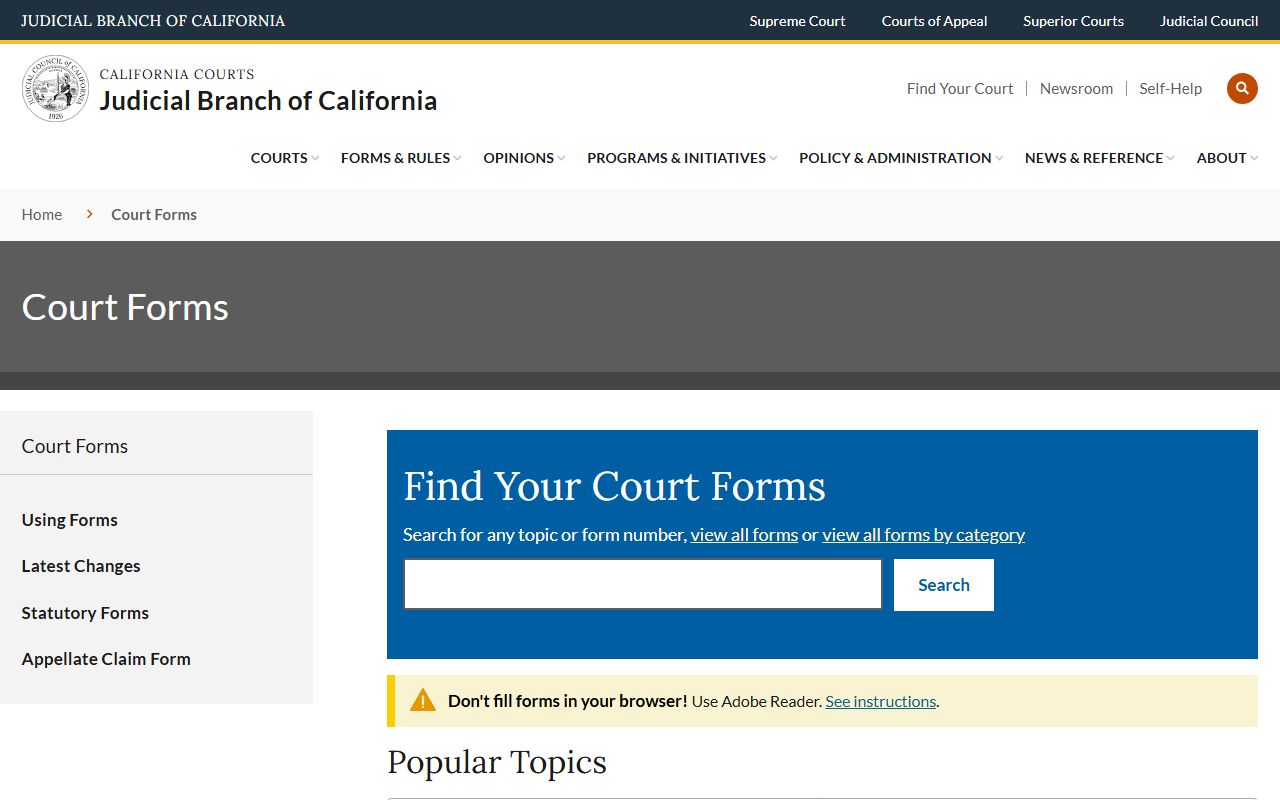
Form DE-111 is the Petition for Probate. Download it from the court website or pick up a copy at the courthouse. Fill out every section. List all heirs and beneficiaries by name and address. Describe the estate assets to the best of your knowledge. Attach the certified death certificate and the original will.
The filing fee is $435. Pay when you submit your petition. The clerk window accepts cash, money order, check, or credit card. After filing, you get a case number and a hearing date. The court schedules hearings about six to eight weeks after filing.
You must notify everyone with an interest in the estate. Publish notice in an approved newspaper. The clerk has a list of papers that qualify. Mail notice to all heirs and beneficiaries. Keep copies of everything you mail. File proof of service forms before your hearing date.
Attend the hearing. Bring photo ID. The judge reviews your petition and documents. If approved, the judge signs an order appointing you as administrator. You receive letters that prove your authority. These letters let you access bank accounts, manage property, and handle other estate business.
Court Forms and Resources
California offers self-help resources at selfhelp.courts.ca.gov/probate. The site explains probate in simple terms. All court forms are available for free download. Instructions come with most forms. The site also answers common questions about the process.
Los Angeles County requires electronic filing for attorneys in probate cases. This has been mandatory since June 2017. Self-represented people can still file on paper in person or by mail. Electronic filing is optional for non-attorneys.
When searching for cases, try different name variations. Search by last name only. Try with and without middle initials. Some people used nicknames daily but legal documents show formal names. Women may appear under maiden names, married names, or both.
Remember that not all deaths result in probate cases. Assets under $208,850 can use simplified procedures. Property with beneficiary designations transfers outside probate. Joint accounts pass automatically. Living trusts avoid probate entirely.
Getting Legal Assistance
The Stanley Mosk Courthouse has a self-help center on the first floor. Staff help you understand procedures and fill out basic forms. They cannot give legal advice about your situation. The center operates during court hours on a walk-in basis.
Several organizations provide free or low-cost legal help to LA County residents:
- Bet Tzedek Legal Services at 323-939-0506 handles estate matters
- Legal Aid Foundation of Los Angeles at 800-399-4529 serves low-income families
- Neighborhood Legal Services of Los Angeles County at 800-433-6251
- Los Angeles County Bar Association Lawyer Referral at 213-243-1525
Public libraries in Lakewood and throughout LA County have legal reference sections. Librarians can show you where to find probate information and forms. Many libraries have computers you can use to access online court resources.
Note: If the estate is small, consider using affidavit procedures. Form DE-310 works for personal property. Form DE-305 handles real estate. These simplified procedures are faster and cheaper than full probate.
Death Certificate Orders
Certified death certificates are required to file probate and handle estate business. Order from the Los Angeles County Registrar-Recorder at 12400 East Imperial Highway in Norwalk. You can also order online through the county website. Each certified copy costs about $28.
County processing takes one to two weeks. Bring valid ID if ordering in person. You must show your relationship to the deceased. Only certain people can get death certificates. This includes immediate family, legal representatives, and attorneys.
The California Department of Public Health in Sacramento also has death records. Mail orders to P.O. Box 997410, Sacramento CA 95899-7410. Online ordering is available. State processing takes three to four weeks, longer than county service.
Order multiple certified copies at once. You need originals for court, banks, insurance, and government agencies. Photocopies are not accepted. Getting additional copies later adds time to your process.
Other LA County Cities
Cities near Lakewood that also use LA County Superior Court for probate include Long Beach, Downey, Norwalk, Carson, Torrance, Compton, Los Angeles, and South Gate.
Adjacent counties include Orange County to the southeast and San Bernardino County to the east.
Probate Timeline Details
Most probate cases take nine to eighteen months from start to finish. Simple estates with liquid assets may complete in eight or nine months. Complex cases involving real estate sales or family disputes take longer. Much of the time is spent in waiting periods mandated by law.
After receiving your letters, file an inventory within four months. List all estate assets and their values. A probate referee appraises certain property types. Publish notice to creditors. They have four months from first publication to file claims.
When all debts are paid and waiting periods end, file a final petition. Include a complete accounting of all money received and spent. The court reviews this carefully. After approval, distribute assets to heirs. Get signed receipts. File the receipts to close the case.
Keep detailed records throughout the process. Save every receipt for estate expenses. Document all payments to creditors and beneficiaries. Good records make the final accounting much easier.